
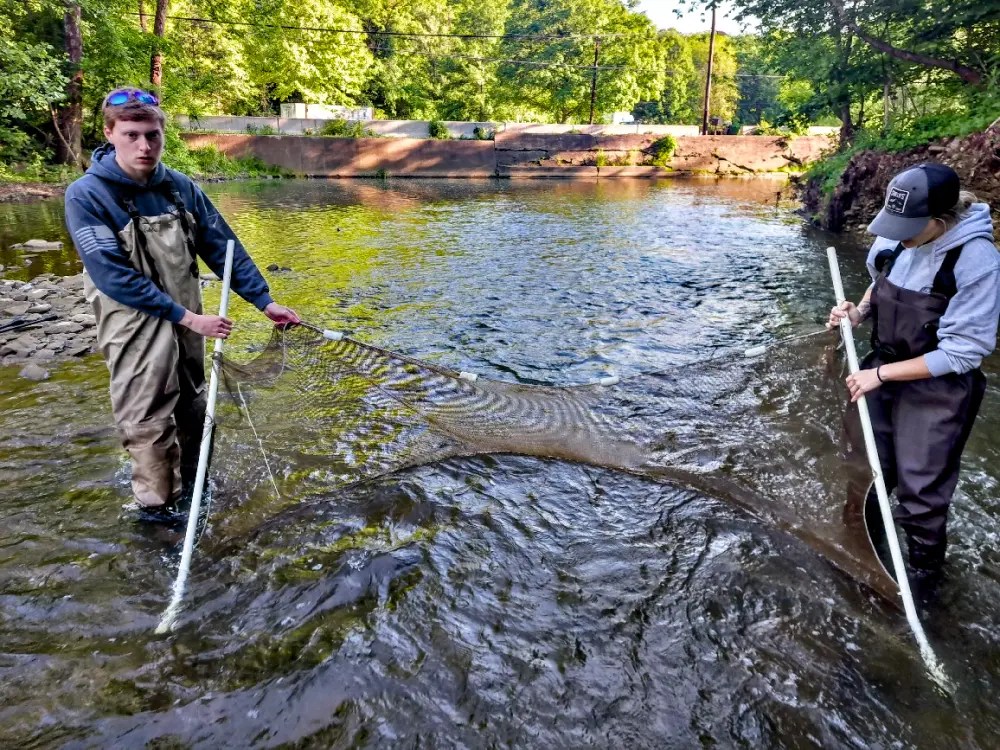
In the Spring of 2024, Dr. David Argent and PennWest Cal students completed the first e-fishing survey of Pigeon Creek in recent memory. The results were quite eye-opening, especially regarding the variety of species caught. The group returned in the Fall (September-October) and surveyed the same three areas. Well, if the spring results were ” eye-opening,” the Fall catch was “eye-popping.” The number of species caught and the total number of fish caught were significantly higher than in the Spring results.
Dr. Argent offered two possible explanations for this. First, although they sampled the same range and total area, they may have gained some positive experience in sampling. Second, the hot, dry Summer has resulted in shallower stream water levels all over the Western Pennsylvania region.
For example, this is Pigeon Creek below Site 1.
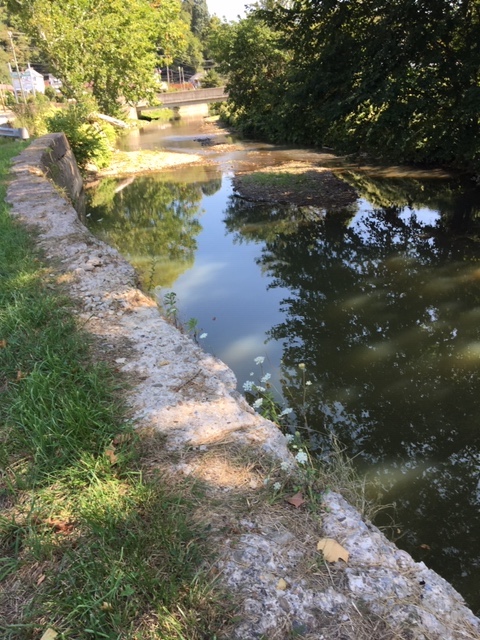
The area along the wall in the foreground is still a very deep pool, but directly below that are rocks exposed in mid-stream that are usually underwater bank to bank. This would be expected to result in some pooling of the fish into the available habitat. But, no matter the explanation, it’s easy to undercount the fish populations, but it’s pretty hard to overcount. The fish either show up in the net or they don’t. Moreover, since the sampling technique is limited to wadeable pools, areas like the very deep pool at the base of this wall likely contain more large bass & suckers. So, we’re probably still undercounting some species.
Remarkable results
However, the results were still remarkable; There were a total of 444 fish caught in 23 different species.
Breaking it down some :
- 2 species of Bass – 1 Spotted Bass & 10 Smallmouth Bass
- 3 species of Panfish – Rock Bass, Bluegill, and Green Sunfish for 12 total
- 4 species of Sucker Fish with 68 total caught
A word to that last one. Sucker Fish have tended to be looked down on as table fare. “They’re bottom feeders”. “Trash fish”. But, while White Suckers are tolerant of pollution & silty bottoms, the Redhorse & Northern Hog Sucker prefer the clear running water & rocky bottoms, also preferred by Smallmouth Bass & many Darter species. Sucker Fish are a very sustainable fishery, spawning in very large numbers in the Spring. Historically, some Native American peoples relied on the heavy late Winter-Early Spring spawning runs as an important protein source. Several articles cited Golden Redhorse as a particularly tasty species. E.g., from the Missouri Department of Conservation: “Much of the gigging and snagging harvest of redhorse suckers in Ozark streams is of this species and its relative the black redhorse (“white sucker”). Also caught on hook and line. Scored and deep-fried, the Y bones disappear; the firm, sweet flesh is delicious.”
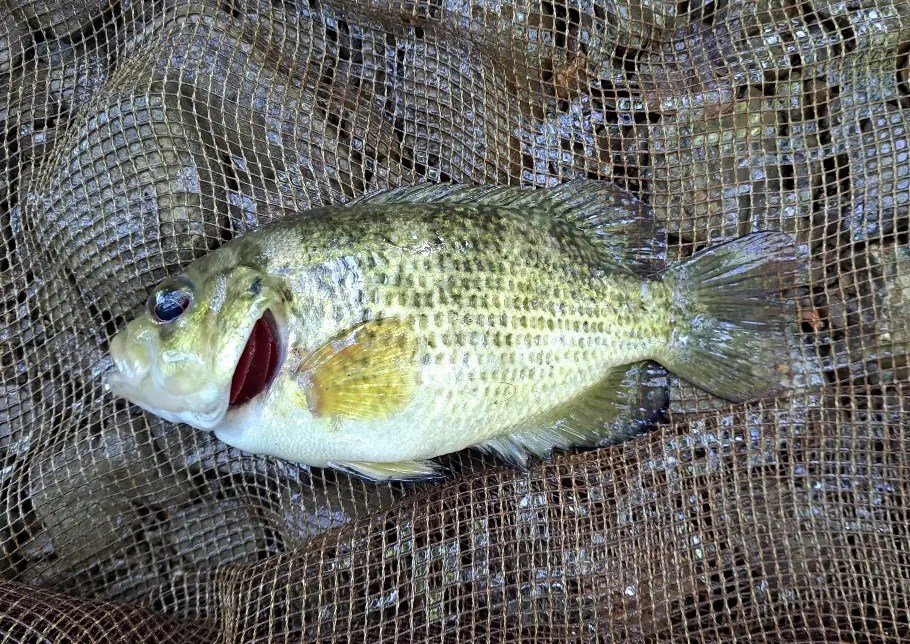
Sucker fish, good eating?
When considering sucker fish, it’s important to recognize that what’s considered “good to eat” is very culturally determined, and sucker fish, in general, were looked down on around here. Growing up in the Mon Valley, “everybody” knew that “nobody” ate Carp. So, imagine my surprise when I traveled in Germany in the late 1970’s & first saw fresh Carp on ice in a fresh meat & fish shop. It turns out that Carp was a common European table fare at the time. The Jewish food preparation, Gefilte Fish, is based on ground Carp. It simply means stuffed fish, & the Yiddish word for “stuffed” is derived from a 9th-century Middle German dialect. The modern, standard German, gefullte, has the same meaning.
The traditional, meatless Christmas Eve dinner in Poland still includes fried Carp filets.
Closer to home, a Texas Parks & Wildlife recipe for fried carp fillets has a recommendation similar to that for suckers: “Regardless of whether it is to be fried or baked, the carp should be “scored.” Slice two-thirds of the way through the meat every 1/8 to 1/4 inch with a sharp knife. Scoring allows heat and cooking oils to penetrate and soften the fish’s many small bones.
Carp is the most widely cultivated (food) fish in the world and is quite popular in Asia, parts of Europe, and South America. So, pass me some of those Carp croquets. I’ll try that long before I eat tripe, brains, or the deceptively named “sweetbreads”(they are neither). I have my own culinary hangups.
2024 Fall fish survey results
Sorry for the cultural culinary detour. The Fall fish survey catch is rounded out by a wide array of forage fish :
– Darters- 168 fish in 3 species
– Minnows – 36 of 1 species
– Shiners – 26 in 4 species
– 9 Creek Chubs
– 109 Central Stoneroller
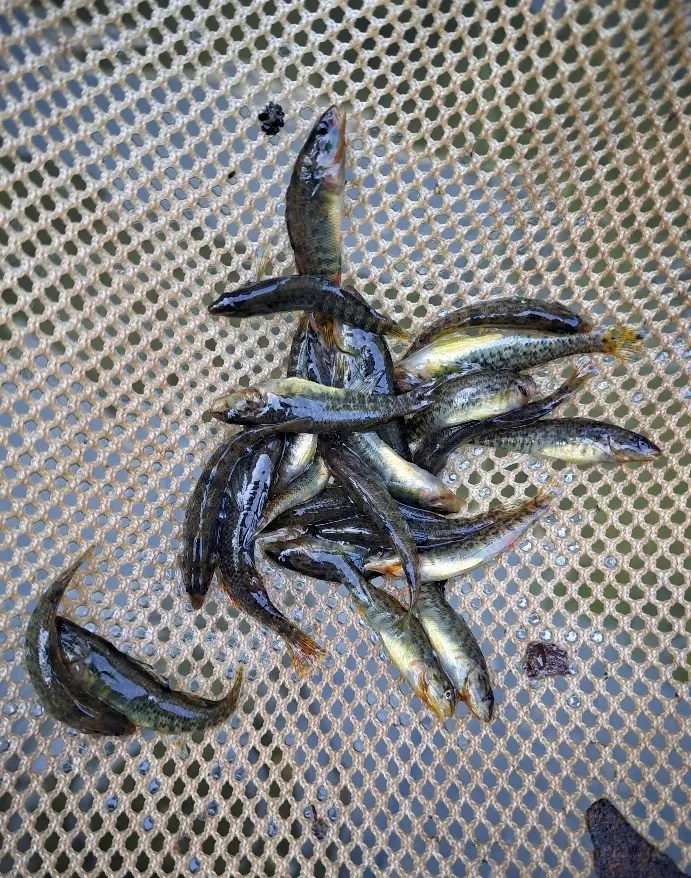
To develop a good sport fishery, e.g., for Smallmouth Bass, two important issues would be sufficient quality habitat and food supply. Regarding food supply, pond stocking recommendations range from 10 Bluegill per Largemouth Bass (traditional) to 20 Bluegill per Largemouth Bass. There certainly seems to be sufficient numbers of potential forage fish in Pigeon Creek, but we don’t know enough about their quality. We’ve asked the PA Fish & Boat Commission, Area 8, Fisheries Manager to comment on these issues.
While waiting for a Fish & Boat response we posed similar questions to Dr. David Argent of PennWest Cal. Regarding habitat, he suggested that the first issue should be stabilizing eroding banks. We agree & have started some projects in this direction. We also asked if supplemental fish stockings, e.g., of Smallmouth Bass & Channel Catfish, might be recommended. His recommendation was to leave things as they are, ” a nice fish community.”
I think that’s as positive a sounding description as one can expect at this point, and we’ll go with it—a nice fish community.
For those interested in data, we’ve added the complete reports in a .pdf fomat. Just click the Download button below.
Ken Yonek
Pigeon Creek Watershed Association


Leave a Reply