
Dr. David Argent and PennWest Cal Students Complete 2024 Electrofishing Survey
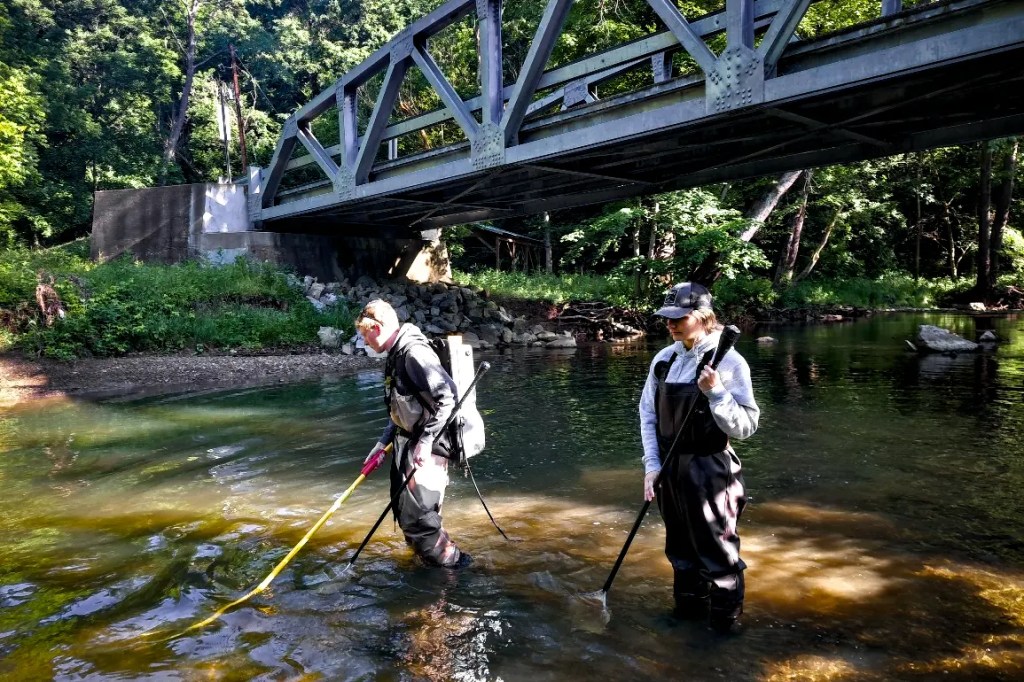
Last year, a group from PennWest California made multiple attempts to conduct an electrofishing survey of Pigeon Creek. Unfortunately, adverse weather conditions and high water levels forced them to cancel each attempt. Despite these challenges, they persevered and successfully completed the survey in May 2024. Under the leadership of Dr. David Argent, the team, comprising PennWest Cal students, sampled three different locations along the creek:
- Site 1. Along Park Ave across from the rodeo/old soccer fields.
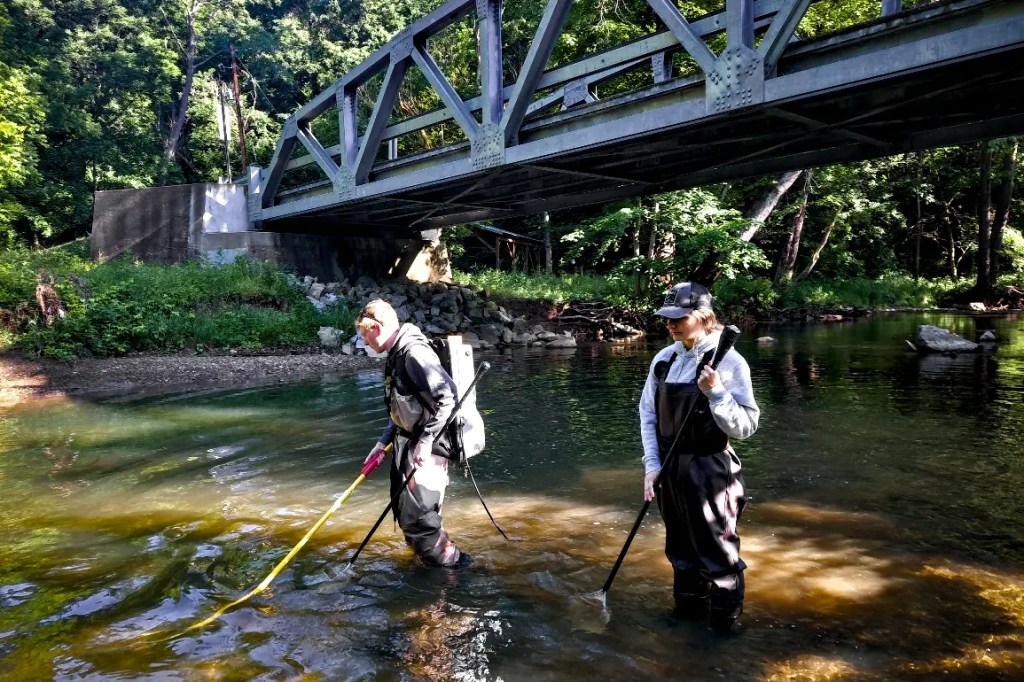
- Site 2. Along Bentleyville Rd under the I43 bridge crossing.
- Site 3. At the “Iron Bridge” on Butsko Rd at Sawmill Run, which is about halfway upstream to Bentleyville from Mon City.
What is electrofishing?
Electrofishing is a method employed by researchers to evaluate the fish population in rivers and creeks. When conducted correctly, it temporarily stuns the fish, enabling them to be safely extracted with a net, examined, and then released unharmed, ensuring no lasting harm is inflicted.
Electrofishing requires a two-person team, with one individual discharging the electrofisher and the other carefully holding a net near the anode to safely catch the affected fish. Following this process, scientists can carefully gather the fish, assess their weight and measurements, and then return them to the river unharmed. Regular electrofishing surveys are pivotal for PAWC to determine whether the water quality in Pigeon Creek is improving.
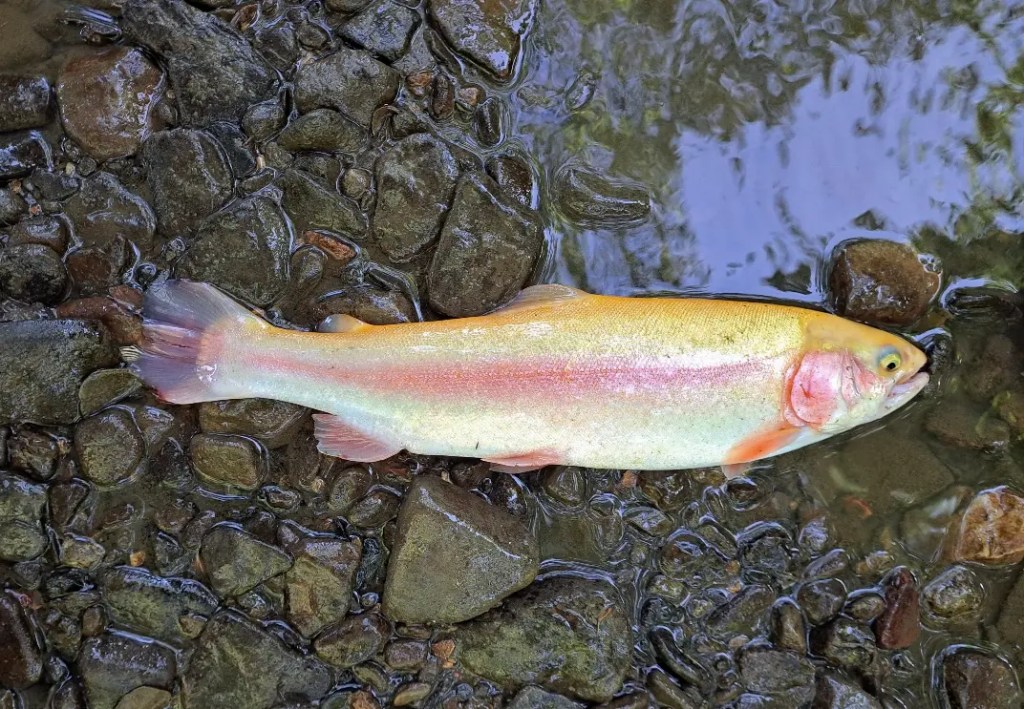
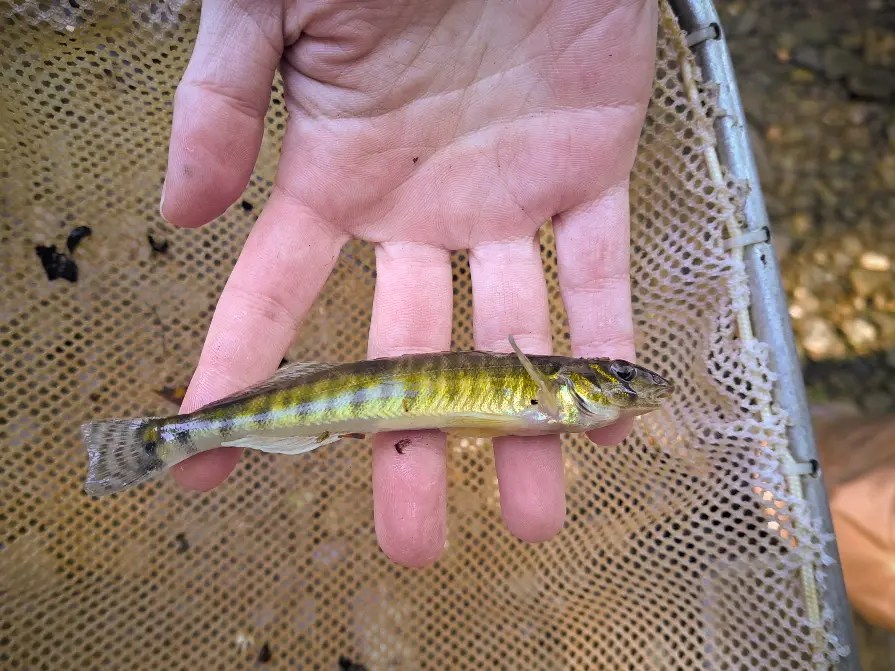
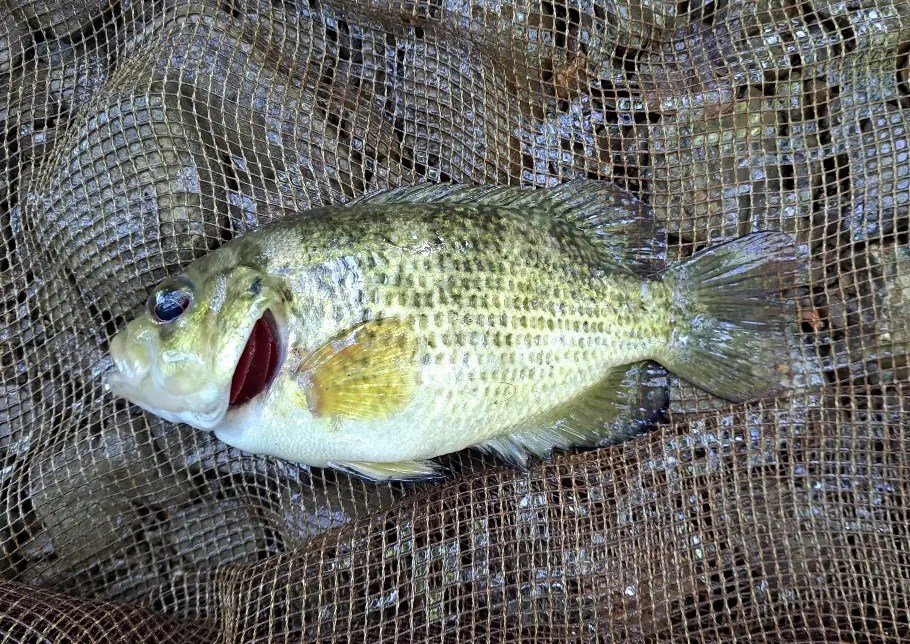
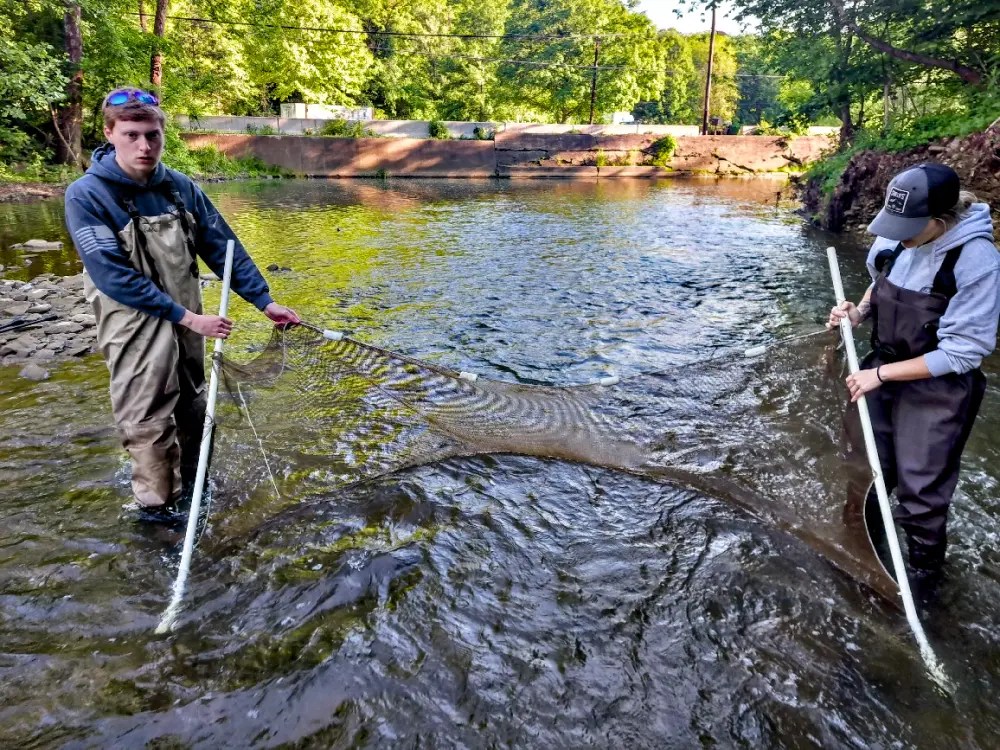
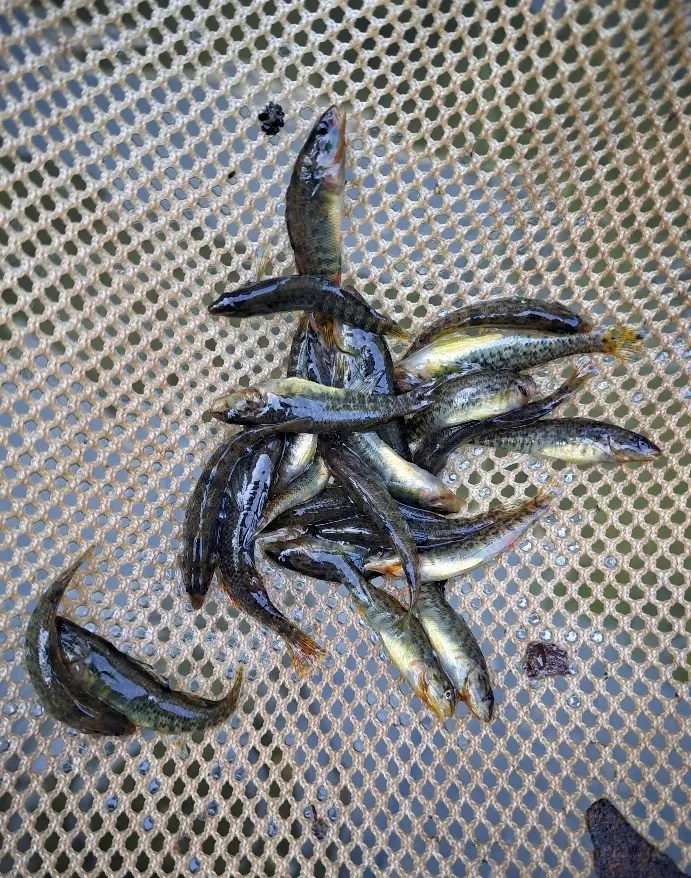
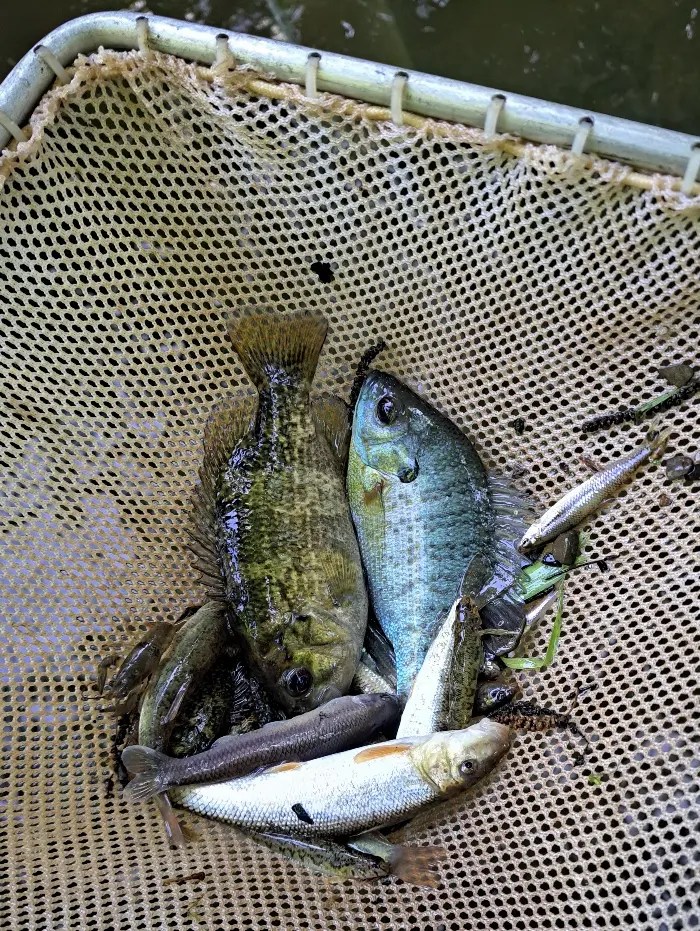
Because of the handheld equipment used, the pools sampled were less than three feet in depth, and students mostly stood in knee-high water for safety reasons. One wouldn’t expect to find many larger fish in shallower, clear, open water in broad daylight, so we expected to catch mostly smaller fish. However, as a gauge of stream health or the fishery’s potential, catching smaller fish would be fine because you can’t support a population of larger fish without a healthy population of smaller forage species. So, what did the team catch? (click images to enlarge)
A Positive Finding Overall
Of these fish, 137 were Darters of 5 different species, indicating a good sign for stream quality. Darters live on the stream bottom and feed on macroinvertebrates and larval species living there, suggesting a relatively good food supply for the Darters. Most Darters prefer clear water with rocky, gravel, or sand bottoms, which is also a preferred habitat for Smallmouth Bass, indicating a healthy stream.
The variety of cool water to warm water species and pollution-tolerant species suggests that Pigeon Creek can support a diversity of aquatic life. In addition to the Darters, one Palomino Trout (stocked), one legal Smallmouth Bass, and a mix of panfish and mid-sized fish were also caught. Dr. Argent proposed that the group may return in the Fall, when stream levels are lower, to conduct a survey with a towed barge piece of equipment, which may capture more of the larger fish/species hiding in deeper pools.
2024 Pigeon Creek Electrofishing Report
Below is the complete electrofishing report. Click the download button if you would like to save a .pdf copy to your computer.
More about Electrofishing
We encourage you to watch the informative video created by the Kennebecasis Watershed Restoration Committee to gain valuable insights into the fascinating technique of electrofishing and witness it in action:

 Pigeon Creek Watershed Association
Leave a reply to Jason Harris Cancel reply